Most people think of their mouth and lungs as two separate systems — one for chewing and the other for breathing. But what if I told you that the health of your mouth can directly affect how well you breathe?
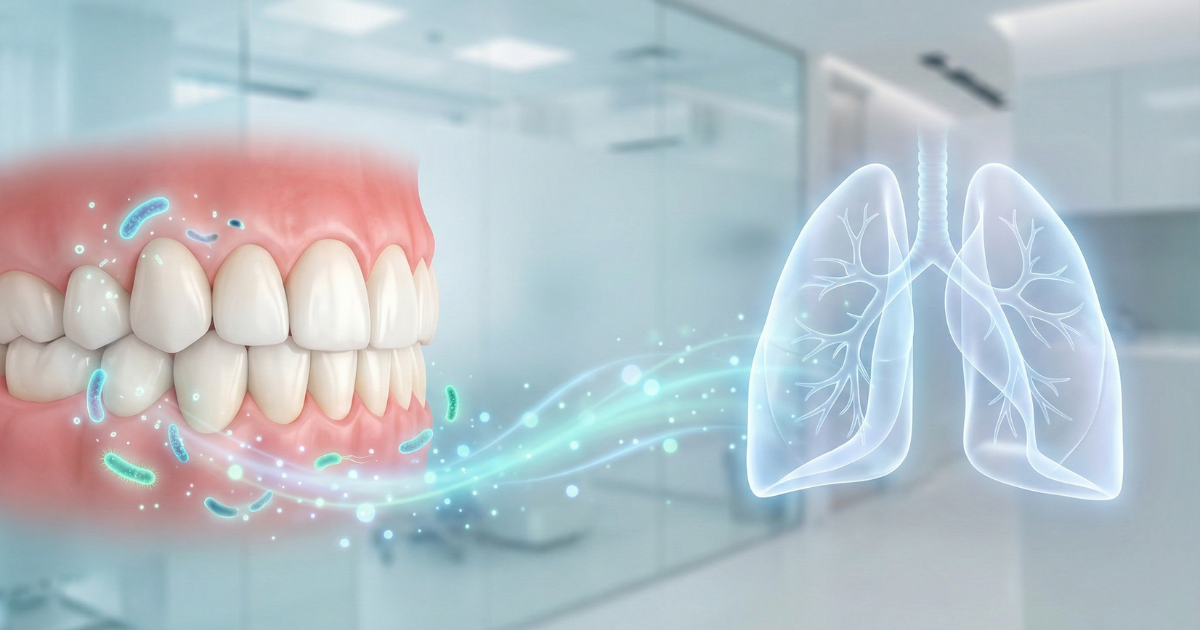
It’s true. The bacteria in your mouth don’t always stay in your mouth — and that can have a big impact on your lungs and your overall health.
Your mouth is home to millions of bacteria — some good, some not so good. When you have gum disease or poor oral hygiene, harmful bacteria can build up around the gums and teeth.
At night, while you sleep, these bacteria can travel down tiny droplets of saliva and enter your lungs — a process called microaspiration.
This can happen to anyone, but it’s more common in:
Once these bacteria enter the lungs, they don’t just sit quietly. They can trigger inflammation, disrupt your lung’s natural defenses, and even lead to infections like pneumonia.
Gum disease isn’t just about bleeding gums or bad breath — it’s actually a chronic inflammatory condition.
When your gums are infected, they release inflammatory “messengers” throughout your body. These chemicals increase inflammation everywhere, including in the lungs.
That’s why studies have found that people with gum disease are:
Researchers have even found the same bacteria that cause gum disease — Porphyromonas gingivalis — inside the lungs of patients with COPD. That means the bacteria didn’t just travel; they settled in and made things worse.
One of the most surprising discoveries is how oral bacteria make lung infections worse.
P. gingivalis, the same bacteria behind severe gum disease, can actually prepare the lungs for other harmful bacteria like Streptococcus pneumoniae — one of the leading causes of bacterial pneumonia.
It does this by creating “landing pads” on your lung cells, making it easier for dangerous bacteria to attach and multiply.
So it’s not just that oral bacteria reach the lungs — they make the lungs more vulnerable to infection.
Anyone can be affected, but some groups are more vulnerable:
Even people without teeth (dentures or edentulous patients) can be at risk if bacteria build up on the tongue or oral appliances.
If you use inhalers or certain medications, you might have noticed dry mouth.
Saliva isn’t just there to keep your mouth moist — it helps protect you by washing away bacteria.
When saliva flow decreases, bacteria thrive, gum disease worsens, and the risk of infection increases.
This creates a cycle where lung medication helps your breathing but harms your mouth, which can then make your lungs worse again.
That’s why rinsing your mouth after using inhalers is more than just a good habit — it’s an essential step for protecting both your oral and respiratory health.
Even though the research is clear, awareness is still low.
Most people never hear their dentist talk about their lungs, and most doctors rarely ask about oral hygiene.
Surveys show that while almost every dentist agrees this education is important, many don’t have enough time to explain it during appointments.
At the same time, fear, shame, or anxiety often keep patients from seeing the dentist regularly — which allows these hidden problems to build up silently.
The good news is that protecting your lungs starts with simple daily habits:
If you or someone you care for has a chronic lung condition or is in a long-term care facility, oral care should be part of the daily health routine — not an afterthought. Even one dental visit every few years can lower pneumonia risk.
This new understanding — the Mouth–Lung Connection — changes the way we should think about oral care.
It’s not just about having a nice smile. It’s about protecting your breath, your lungs, and your overall health.
At Smile Inn, we want patients to see oral hygiene as part of whole-body wellness.
Your mouth isn’t separate from the rest of your body — it’s the gateway to it.
By taking care of it, you’re not just preventing cavities or gum disease — you’re supporting a stronger immune system, healthier lungs, and a better quality of life.
The next time you brush your teeth or visit the dentist, remember — you’re not just taking care of your smile.
You’re protecting your ability to breathe, to live comfortably, and to stay healthy.
Good oral health is good lung health.
And it all starts with the simple, daily steps you take at home.


.svg)