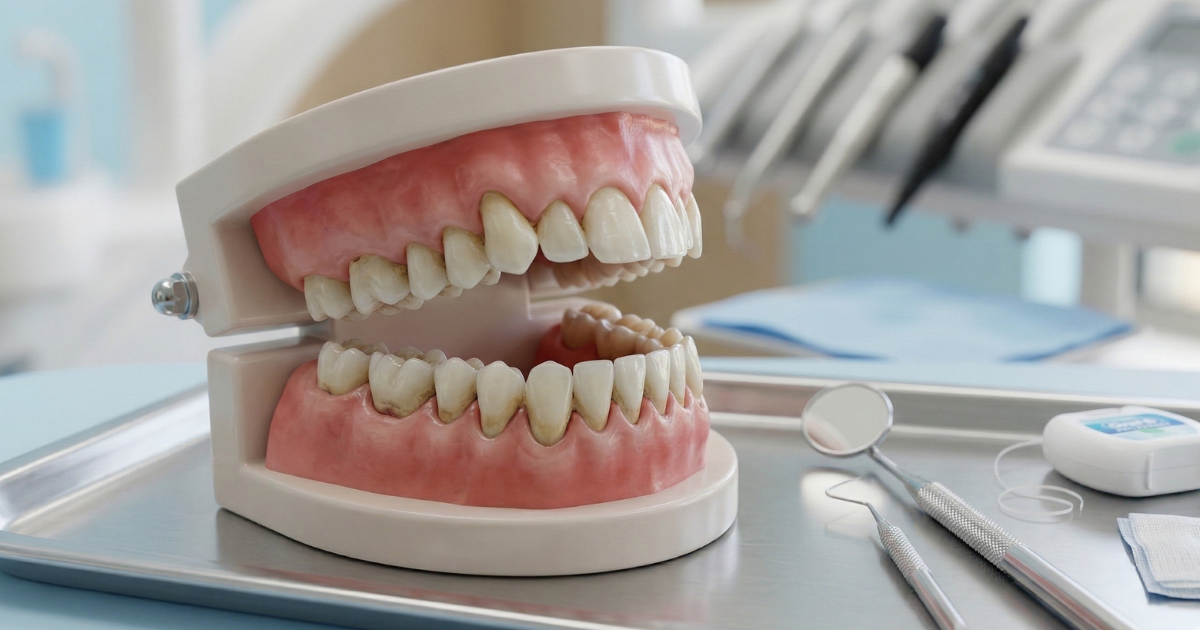
Many people think misaligned teeth are only a cosmetic issue. But improper tooth alignment can lead to a variety of oral health problems over time.
When teeth are not positioned properly, it affects how the teeth meet, how pressure is distributed when chewing, and how easily you can clean your mouth. These factors can increase the risk of gum disease, tooth damage, and other dental complications.
Below are some of the most common problems associated with improper tooth alignment and why they matter for your long-term oral health.
Improper tooth alignment can place uneven pressure on the gums and supporting bone.
When certain teeth experience more pressure than others, the gum tissue around those teeth may begin to pull away or recede. Receding gums expose the roots of teeth, which can lead to:
Over time, untreated gum recession can also affect the stability of the tooth.
Abfractions are small wedge-shaped defects near the gumline of the tooth.
These can occur when teeth are misaligned and biting forces are not evenly distributed. The stress placed on certain teeth can cause tiny fractures in the enamel at the base of the tooth.
These areas may become sensitive and can also make the tooth more vulnerable to further damage.
When teeth are not aligned properly, they may grind or rub against each other unevenly.
This can lead to excessive wear of the enamel over time. As enamel wears down, teeth may become:
Severe wear can eventually require restorative treatment to rebuild the tooth structure.
Improper alignment can contribute to periodontal pockets, which are spaces that form between the teeth and gums.
When teeth are crowded or misaligned, it becomes harder to clean properly. Plaque and bacteria can accumulate around the gumline, leading to inflammation and infection.
Over time, this can cause the gums to pull away from the teeth, creating deeper pockets where bacteria can grow.
If untreated, periodontal pocketing can lead to gum disease and bone loss around the teeth.
Crowded or crooked teeth can make daily oral hygiene much more difficult.
When teeth overlap or sit too close together, it becomes harder for a toothbrush or floss to reach certain areas.
As a result, plaque can build up in areas that are difficult to clean, increasing the risk of cavities and gum disease.
Because misaligned teeth are harder to clean, plaque can accumulate more easily.
Plaque is a sticky film of bacteria that constantly forms on teeth. When it isn’t removed effectively through brushing and flossing, it can harden into tartar and lead to dental problems.
Higher plaque levels increase the risk of:
When plaque builds up on teeth that are difficult to clean, it creates an environment where tooth decay can develop more easily.
Crowded teeth often trap food particles and bacteria in tight spaces. If plaque remains on the tooth surface for long periods, acids produced by bacteria begin to break down the enamel.
This process eventually leads to cavities.
Improper alignment can also affect how well your teeth function when chewing.
When the bite is not balanced, certain teeth may absorb more pressure than others. This can make chewing uncomfortable or inefficient.
Some people may also experience jaw discomfort or difficulty biting into certain foods.
Gingivitis is the early stage of gum disease, and it commonly develops when plaque builds up along the gumline.
Misaligned teeth can make plaque removal more difficult, allowing bacteria to irritate the gums.
Common signs of gingivitis include:
If caught early, gingivitis is usually reversible with proper oral hygiene and professional dental care.
When teeth are not properly aligned, they may continue to shift or move over time.
This can happen due to uneven pressure during chewing or because surrounding teeth begin to move into available spaces.
Gradual shifting can make alignment problems worse and may eventually affect your bite and overall dental health.
Improper tooth alignment can lead to more than just cosmetic concerns. It can increase the risk of tooth wear, gum disease, cavities, and long-term dental complications.
Addressing alignment issues early can help protect both the health and function of your teeth.
If you are experiencing any of these problems or have concerns about your bite or alignment, a dental assessment can help determine the best options for improving your oral health.


.svg)