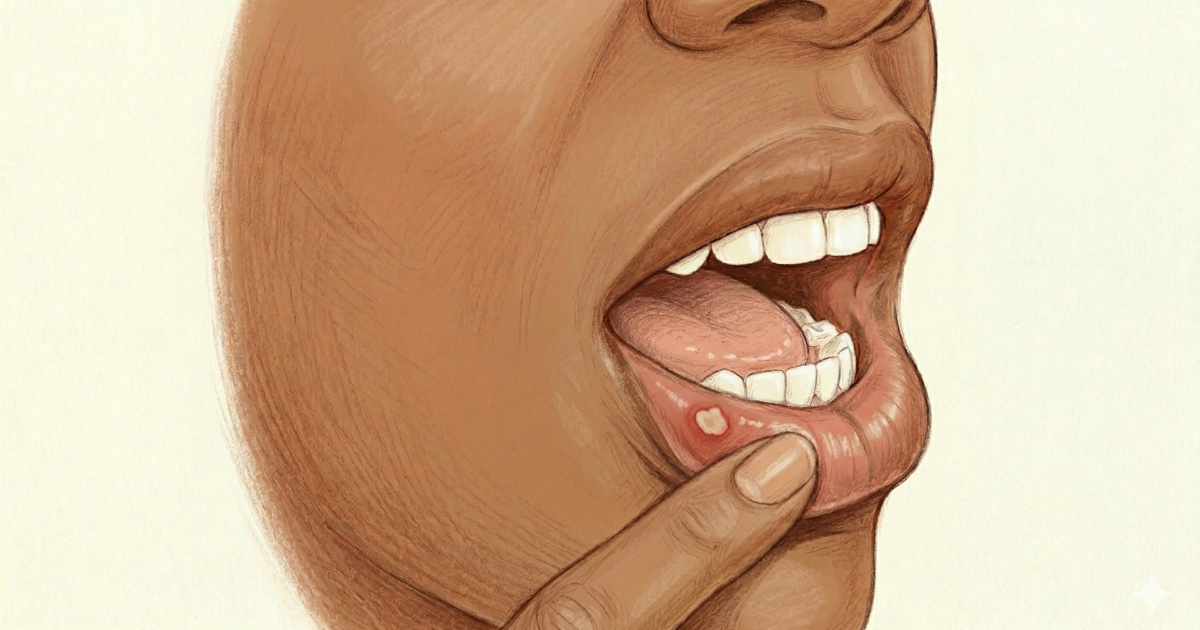
The kind that makes eating, smiling, and even chewing feel impossible?
Well, you are not alone.
They’re called canker sores, and they affect about one in five people. But here’s the thing — most people just chalk them up to stress or bad luck.
And I hear it all the time:
“Doc, I thought it was just me.”
“I didn’t realize this could mean something more.”
Yes, stress can trigger canker sores.
So can something as simple as biting your cheek.
But they’re also linked to things like:
Think of it as your body’s way of saying:
“I need attention.”
And if we ignore these small signals, the pain can keep coming back over and over again.
Now, let’s be real for a moment.
Most ulcers will heal on their own.
But if a sore doesn’t heal within two weeks, that is not something to brush off.
Persistent ulcers can sometimes signal deeper health concerns — and that’s where getting checked becomes important.
The good news is — you don’t have to suffer through it.
In the clinic, we can:
Because the goal isn’t just to treat the sore.
It’s to make sure you’re actually healthy.
If you’ve been dealing with recurring canker sores, you’re not just “unlucky.”
There’s usually a reason.
And once we find that reason, we can stop the cycle — so you’re not constantly dealing with the same pain over and over again.
Sometimes, that small sore in your mouth is your body begging you for care.
Don’t ignore it.
And don’t let anyone tell you, “Don’t worry, it will go away,” especially if it keeps coming back.
Because your health is always worth paying attention to.


.svg)