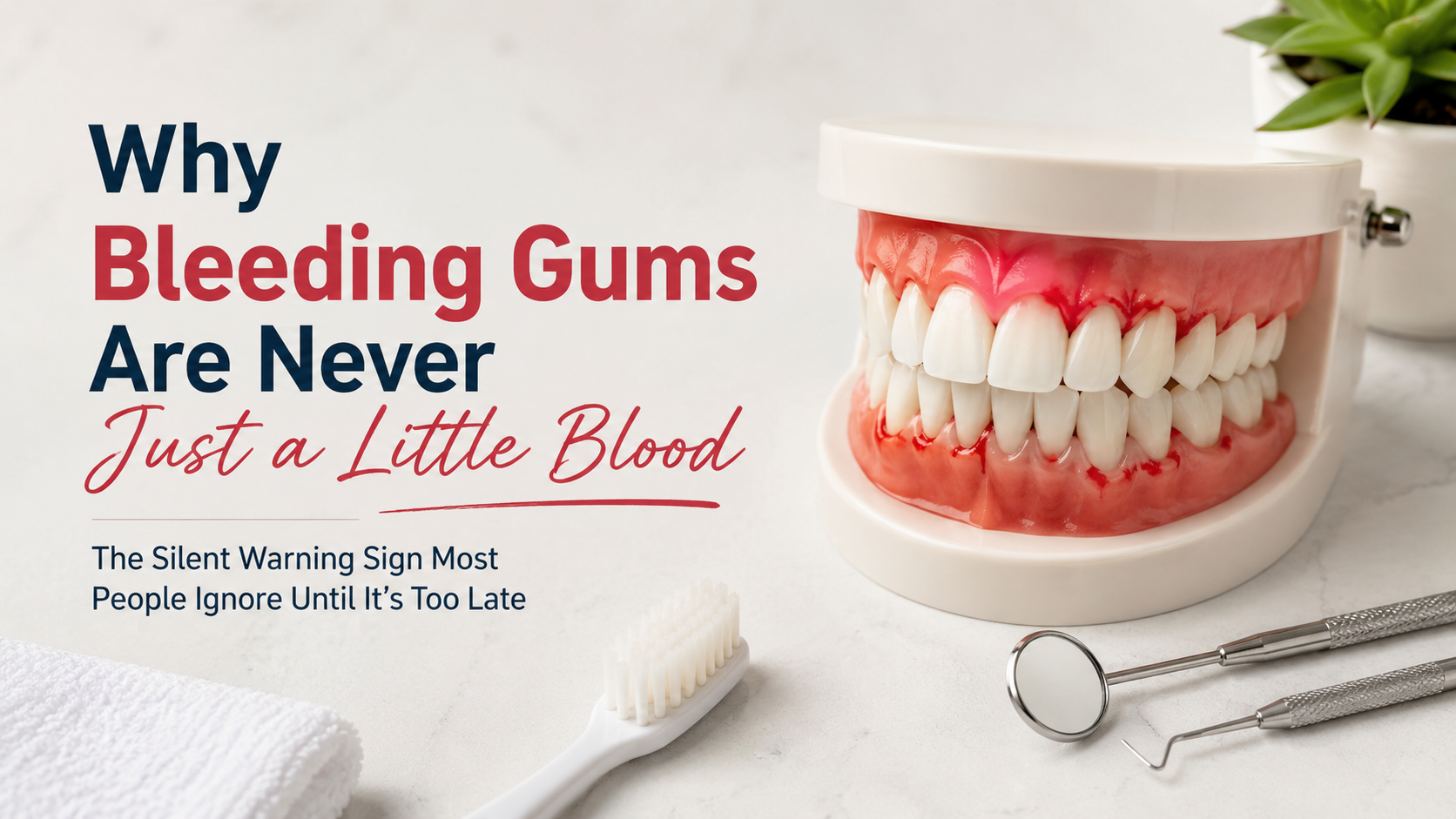
Have you ever brushed or flossed your teeth and noticed blood?
Most people pause for a second, think, “That’s strange,” and then move on.
But here’s the truth: bleeding gums are never normal.
It may seem like a small thing, especially if it only happens occasionally, but your gums may be trying to tell you something important. Bleeding is often one of the earliest signs of gum inflammation, and if ignored, it can progress into more serious oral health problems.
Gum disease is far more common than many people realize.
In the United States, the National Institute of Dental and Craniofacial Research reports that 42.2% of adults aged 30 and older have some form of periodontitis, while the CDC describes gum disease as inflammation and infection of the tissues that support the teeth.
That means bleeding gums are not something to dismiss.
This is something dentists hear all the time.
Patients often say:
“Doc, I thought a little blood was normal.”
But it is not.
Bleeding gums usually mean the gums are irritated, inflamed, or vulnerable. Mayo Clinic lists bleeding, swelling, redness, and tenderness as common symptoms of gingivitis, which is the early stage of gum disease.
In simple terms, your gums are crying out for help.
Gingivitis is commonly caused by plaque buildup along the gumline.
Plaque is a sticky film of bacteria that forms on the teeth. When it is not removed properly through brushing, flossing, and professional cleanings, it can irritate the gums and lead to inflammation.
But gum health is not only about brushing.
Other factors can make the gums more vulnerable, including:
This is why two people may have similar brushing habits, but very different gum health outcomes.
Your gums are often one of the first places health problems show up.
Oral health is closely connected to overall health. Mayo Clinic notes that oral germs and inflammation linked to periodontitis may play a role in certain diseases, while conditions such as diabetes can make it harder for the body to fight infection.
So when your gums bleed, it is not just about your mouth.
It may be a warning sign that your body needs attention.
Untreated gingivitis does not just mean sore gums.
If it is ignored, it can quietly progress into periodontitis, a more serious form of gum disease. Periodontitis can damage the soft tissue and bone supporting the teeth, eventually leading to loose teeth or tooth loss.
That is why early action matters.
The earlier gum disease is detected, the easier it is to manage and reverse the damage before it becomes more serious.
The good news is that gingivitis can often be reversed.
With professional cleanings, tailored home care, and in some cases medicated rinses, inflamed gums can heal and the progression of gum disease can be stopped.
The CDC notes that gingivitis is largely preventable and treatable with proper oral hygiene and professional cleanings.
When patients realize bleeding is not normal, they often feel more in control.
And that relief is huge.
If your gums bleed when brushing or flossing, do not ignore it.
Book a dental checkup, especially if the bleeding happens often or comes with swelling, tenderness, bad breath, or gum sensitivity.
A little blood may feel easy to dismiss, but it could be the sign you cannot afford to ignore.
Bleeding gums are not normal. They are a signal. And the sooner you respond, the better your chances of protecting your smile and your overall health.


.svg)