Getting a wisdom tooth removed can feel overwhelming, especially if it’s your first extraction. One of the most common questions dentists get after surgery is:
“What should I do now to heal properly?”
The good news is that proper aftercare can significantly reduce pain, swelling, bleeding, infection, and the risk of complications like dry socket.
Here’s a complete breakdown of the most important things you should do after a tooth extraction to help your mouth heal safely and comfortably.
Once a tooth is removed, your body immediately starts forming a blood clot in the empty socket.
That clot is extremely important.
It protects:
If the clot becomes dislodged too early, it can lead to a painful condition called dry socket, which delays healing and exposes the bone underneath.
Most aftercare instructions are designed to:
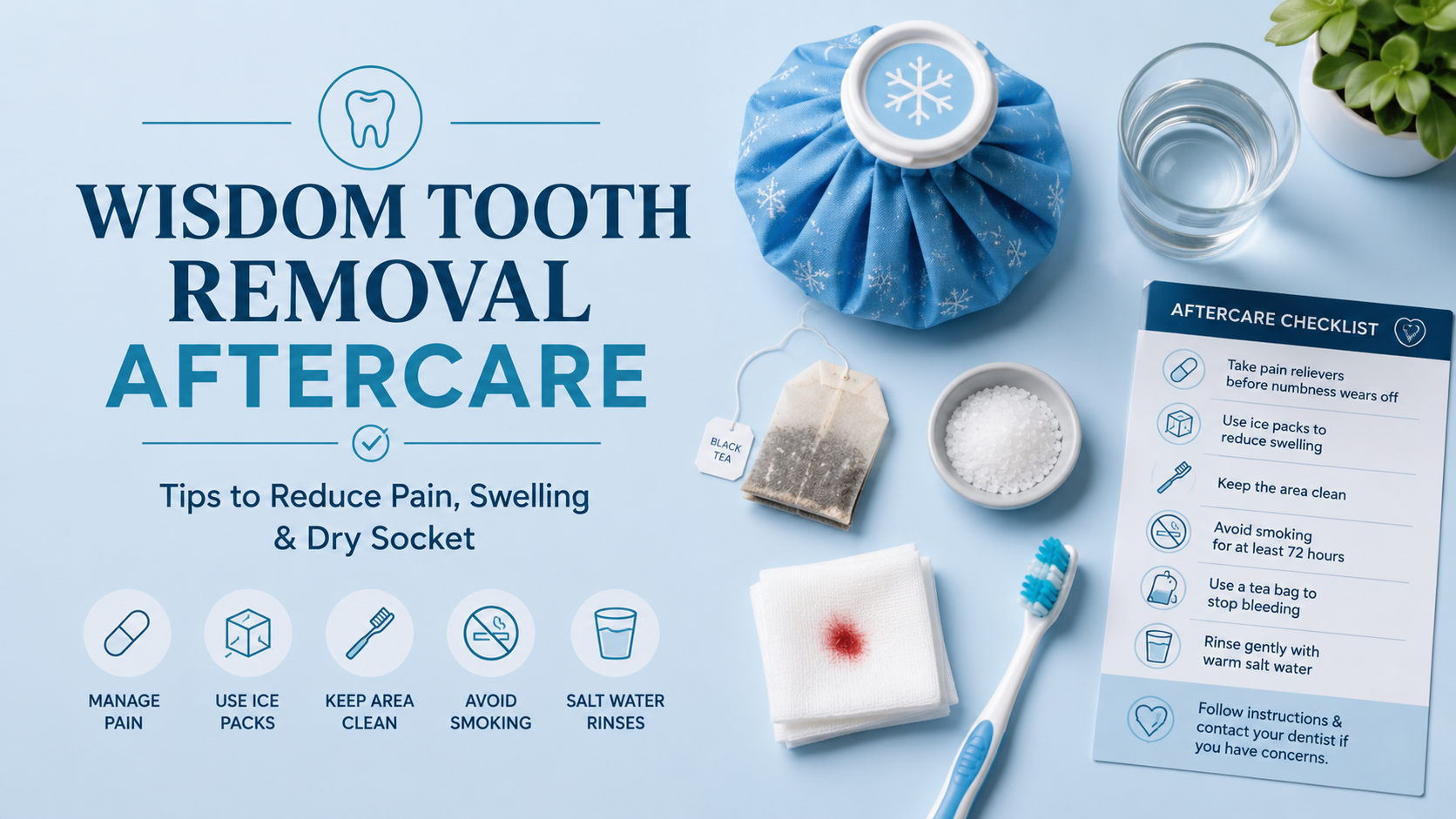
One of the best things you can do after your extraction is to stay ahead of the pain.
Many dentists recommend taking a painkiller shortly after the procedure — often about 10 minutes after the extraction — before the numbness fully wears off.
Common options may include:
The reason this matters is simple:
by the time the anesthetic fades, the medication is already beginning to work.
This can help reduce:
Always follow the dosage instructions provided by your dentist or pharmacist.
Swelling is completely normal after a tooth extraction, especially with wisdom teeth.
A simple ice pack can make a huge difference during the first 24–48 hours.
You can:
Apply the ice pack for:
Cold therapy helps reduce:
The sooner you start icing after surgery, the more effective it tends to be.
After an extraction, your mouth still needs good oral hygiene.
However, you must be gentle around the extraction site.
Continue your normal oral hygiene routine:
The goal is to prevent bacteria buildup without disturbing the healing socket.
Smoking is one of the biggest risk factors for complications after a tooth extraction.
Dentists strongly recommend avoiding smoking immediately after surgery — ideally for at least 72 hours.
Why?
Because smoking can:
This is especially important for lower wisdom tooth extractions, where dry socket is more common.
If you notice some bleeding after leaving the dental office, there’s a simple home remedy many dentists recommend:
a damp tea bag.
Tea contains compounds called tannins, which can help constrict blood vessels and support clotting.
Many patients are surprised by how quickly this can help slow bleeding.
Salt water rinses are one of the best ways to keep the extraction site clean during healing.
Mix:
Instead:
Avoid forceful rinsing because it can disturb the blood clot.
Warm salt water can:
Many dentists recommend rinsing:
Especially after meals.
Dry socket — also called alveolar osteitis — happens when the protective blood clot becomes dislodged or dissolves too early.
This exposes the bone underneath and can cause:
Dry socket is more common:
While some discomfort is normal, contact your dentist if you experience:
These could be signs of infection or dry socket.
The majority of extraction complications happen when patients accidentally disturb the healing process too early.
Simple things like:
can significantly slow healing.
The good news is that with proper care, most wisdom tooth extractions heal smoothly.
Recovering from a wisdom tooth extraction doesn’t have to be difficult.
By:
you give your body the best possible chance to heal quickly and comfortably.
And remember:
if something feels unusual during healing, always contact your dentist for professional advice.


.svg)